
The most precious gift we can offer others is our true presence.


Embracing the
full palette
of human experience
ABOUT MY APPROACH
At the heart of my therapeutic practice lies a deep commitment to mindful, compassionate healing. I believe that true transformation happens when we create space to acknowledge our struggles while nurturing our innate capacity for growth and resilience.
This work isn't about eliminating discomfort — it's about building the courage to face life's challenges head-on.
By making space for both the beautiful and the difficult, you can learn to:
Experience challenging thoughts and feelings with grace and resilience
Approach vulnerability as a source of strength
Cultivate healthier habits that stick
Connect deeply with your sense of purpose
Live authentically, guided by your core values
Modalities
My practice is built on a foundation of mindfulness and self-compassion, designed to help you navigate life's most challenging emotional landscapes. I have been supporting individuals across a wide range of emotional and psychological challenges for over two decades.
I have specialised expertise in helping clients navigate anxiety, perfectionism, burnout, and grief; my approach is flexible and adaptable, designed to meet the unique needs of each person who seeks my support. I work with clients from all backgrounds, understanding that every individual's journey is distinct and deserves personalised, compassionate care.
-
Grounded in the understanding that suffering is a natural part of the human experience, ACT helps us develop the skills to respond flexibly to the challenges of life, instead of trying to change or control our internal experiences.
It teaches us that we can choose our actions based on our values rather than being driven solely by our thoughts and emotions. We become empowered to shape our own lives, instead of being at the mercy of our thoughts and circumstances.
The goal is not to eliminate difficult feelings but to be present with what life brings us and move toward valued behaviour. ACT is not about feeling good all the time but about feeling everything more fully while moving towards what matters most to you.
By moving toward our values, even in the face of discomfort or fear, we create a sense of meaning and fulfillment that transcends momentary happiness. -
CFT is an approach that helps you develop and work with experiences of inner warmth, safeness, and soothing, via compassion and self-compassion. It was developed to help people who struggle with shame and self-criticism.
Key aspects of CFT:
Teaches you to be kinder to yourself
Helps reduce self-criticism and shame
Focuses on developing self-compassion
Uses techniques like mindfulness and imagery exercises
-
MBCT combines cognitive therapy principles with mindfulness practices. It's particularly effective for preventing relapse in recurrent depression.
Key aspects of MBCT:
Teaches mindfulness skills to manage difficult emotions
Helps you become aware of negative thought patterns
Provides tools to respond to thoughts and feelings differently
Includes meditation practices and cognitive therapy techniques

Precious scars
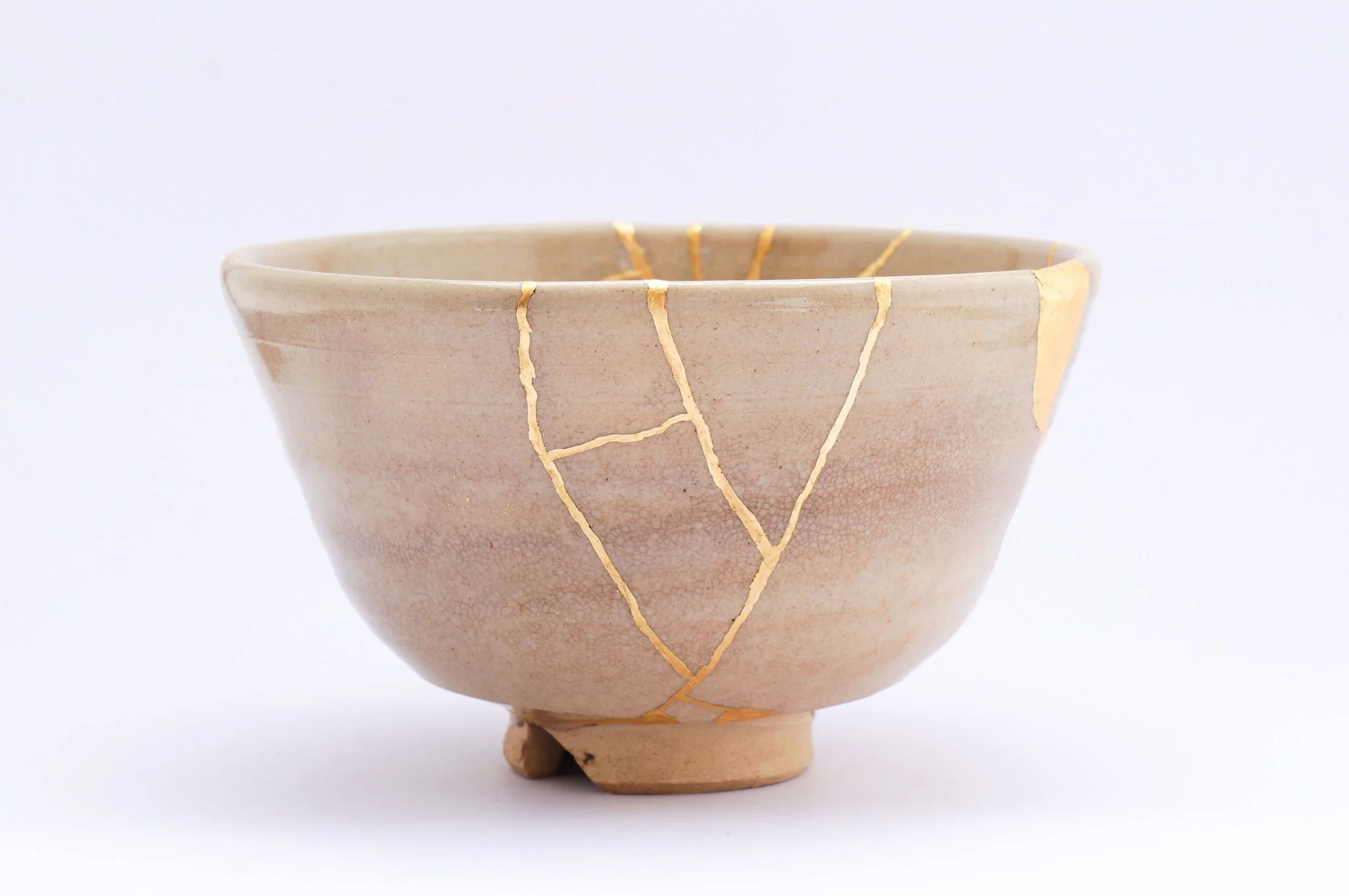
KINTSUGI — THE BEAUTY OF IMPERFECTION
Kintsugi (‘golden joinery’) is the Japanese art of repairing broken pottery and making the scars visible with gold, silver, or platinum. Not only is there no attempt to hide the damage, but the repair is literally illuminated as precious scars.
As a philosophy, Kintsugi treats breakage and repair as part of the history of an object rather than something to disguise. It is a metaphor for finding beauty in imperfection and breaking. Through this new perspective, we can accept setbacks and challenges and interpret them in a new way — heartache, mistakes and failure are part of life. When we pick ourselves up, we do not seek to hide the challenges we have faced. Rather, we recognise them and acknowledge our resilience and what we have learned in much the same way that the Japanese celebrate the mending of broken pottery.
We find meaning not only in the beautiful moments of life but also in the tragic ones.
When I faced the challenges of breast cancer almost 20 years ago, it made me realise that our time is limited and can be quite short — and even shorter when we waste it. This experience taught me that our purpose in life is to give it meaning.

Cultivating resilience through the practice of mindfulness and compassion
Resilience is more than the ability to ‘bounce back’ from whatever life throws at us.
It is a profound concept that encompasses the ability to navigate through the ups and downs of life with grace and equanimity. Rooted in the teachings of the Buddha, resilience is seen as an inherent quality that every individual possesses.
It is the capacity to embrace difficulties and challenges as opportunities for growth and transformation.
Buddhism teaches that suffering is an inherent part of human existence, and resilience is cultivated through the practice of mindfulness and compassion.
By developing an understanding of impermanence and the interconnectedness of all things, we can learn to remain centred and calm amidst the storms of life. Being resilient means being open to our own vulnerability and to use it to deepen our compassion towards ourselves and others. It is about how we relate to our difficulties, our willingness to let go, and flexibility.
It takes courage to embrace that vulnerability in the face of our fears.
We can learn to think about suffering as something that is inherently workable: There’s something beyond pain and suffering. If we learn not to run away from our pain — if we can allow it all the way — we can overcome challenges with a renewed sense of purpose and compassion.

Let’s get started.